The AI says heard. You say confirmed.
A work sample for Everi Labs, who build software for prosthetics clinics: record a patient visit, guide the clinician, end with a note ready to sign. I built it as a prototype you can click.
- Role
- Design and code. Built with Claude Code.
- Timebox
- Four hours, then iterated until the demo.
- Outcome
- Not selected.
Eyes on the patient. Not on the screen.
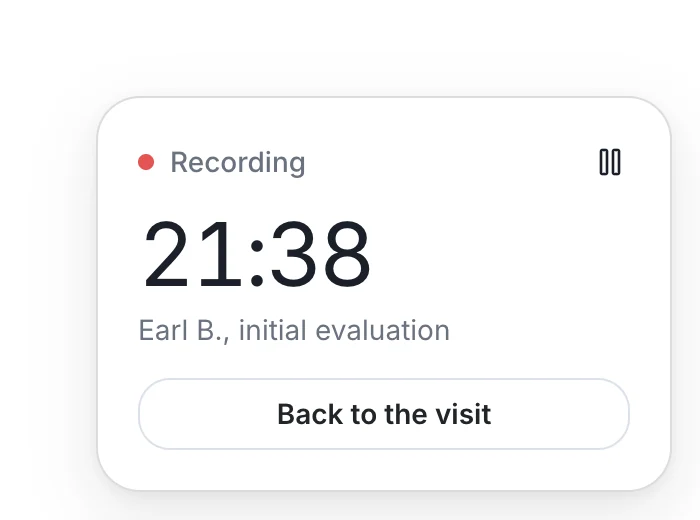
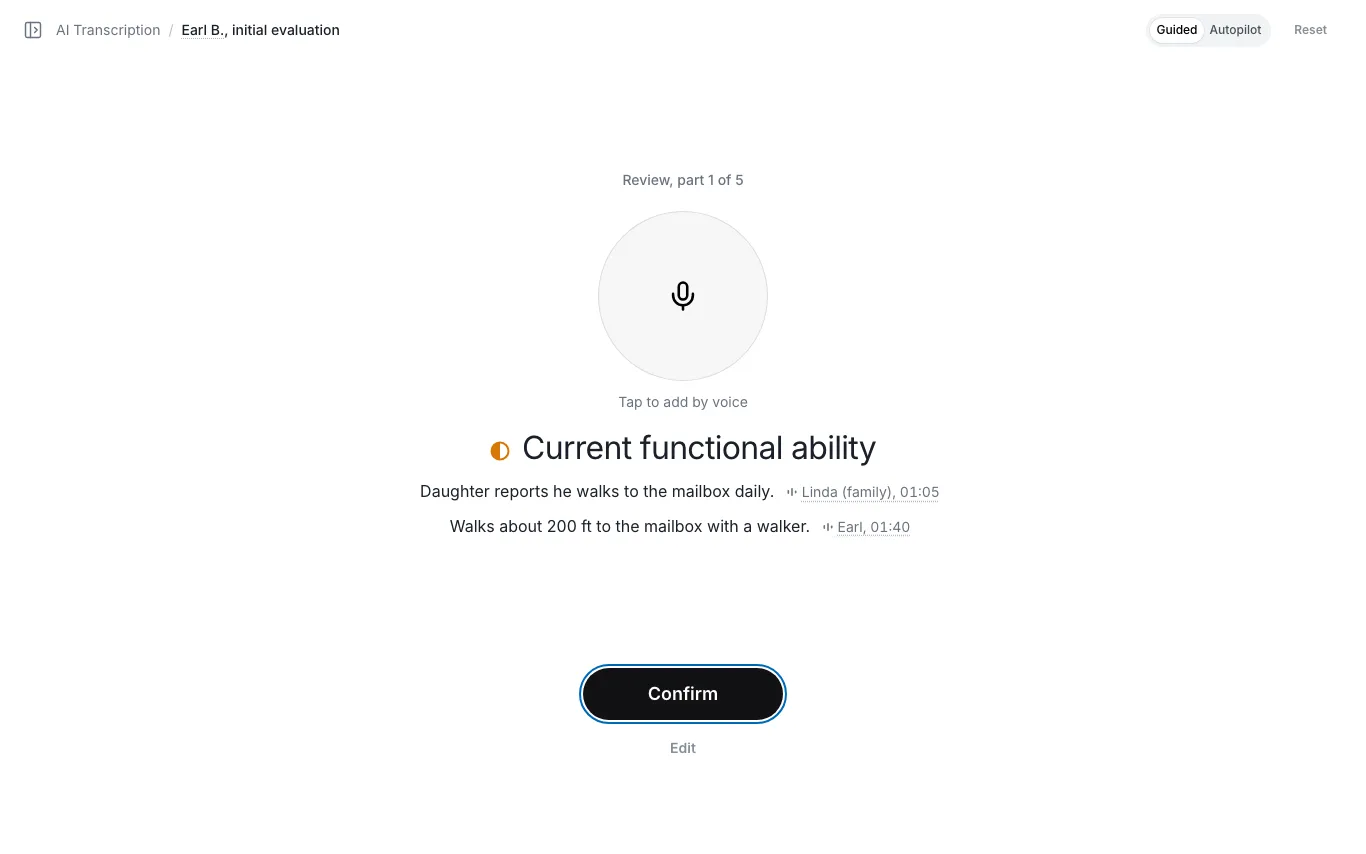
One centred column, the rest left empty. During the visit the screen holds a clock, five dots and one button.
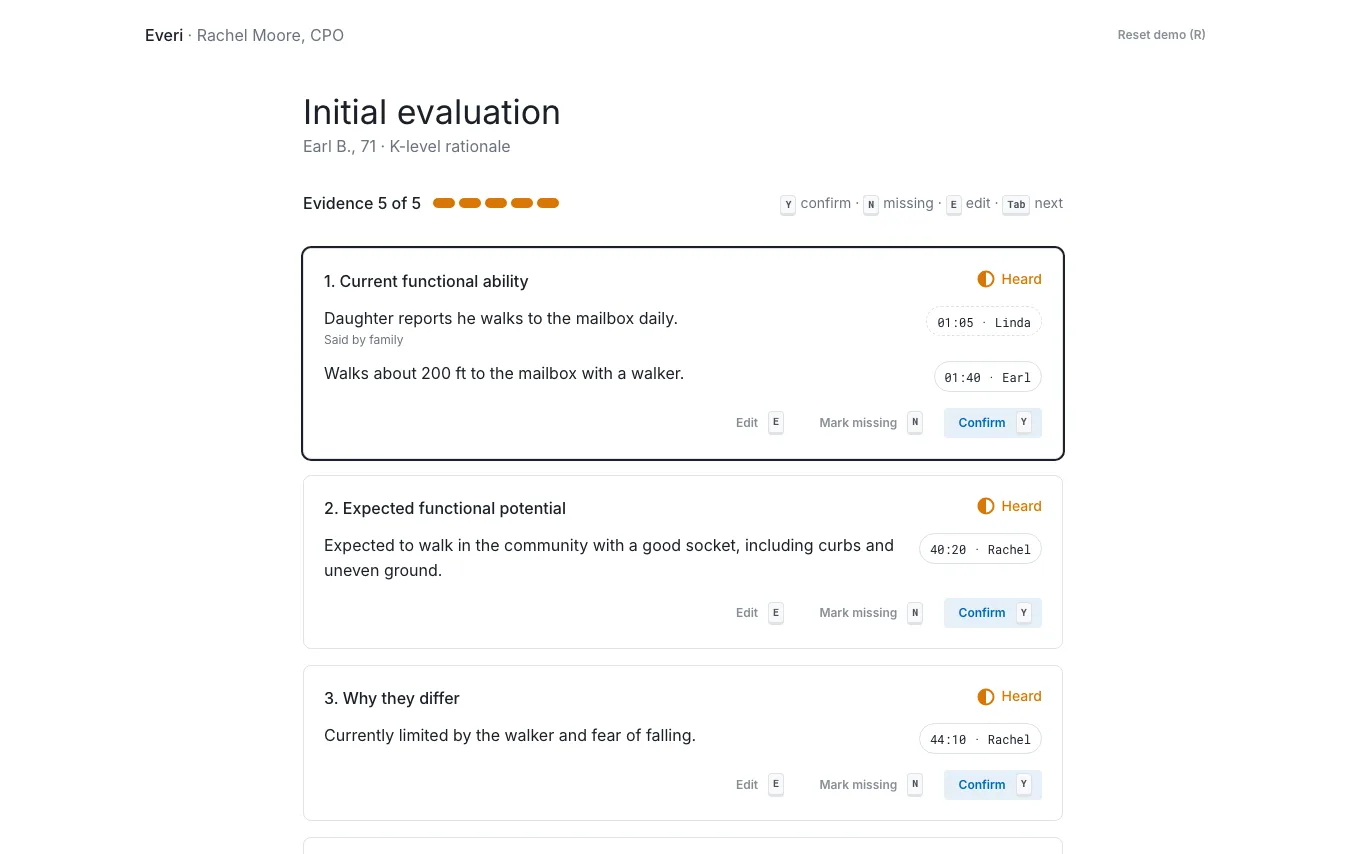
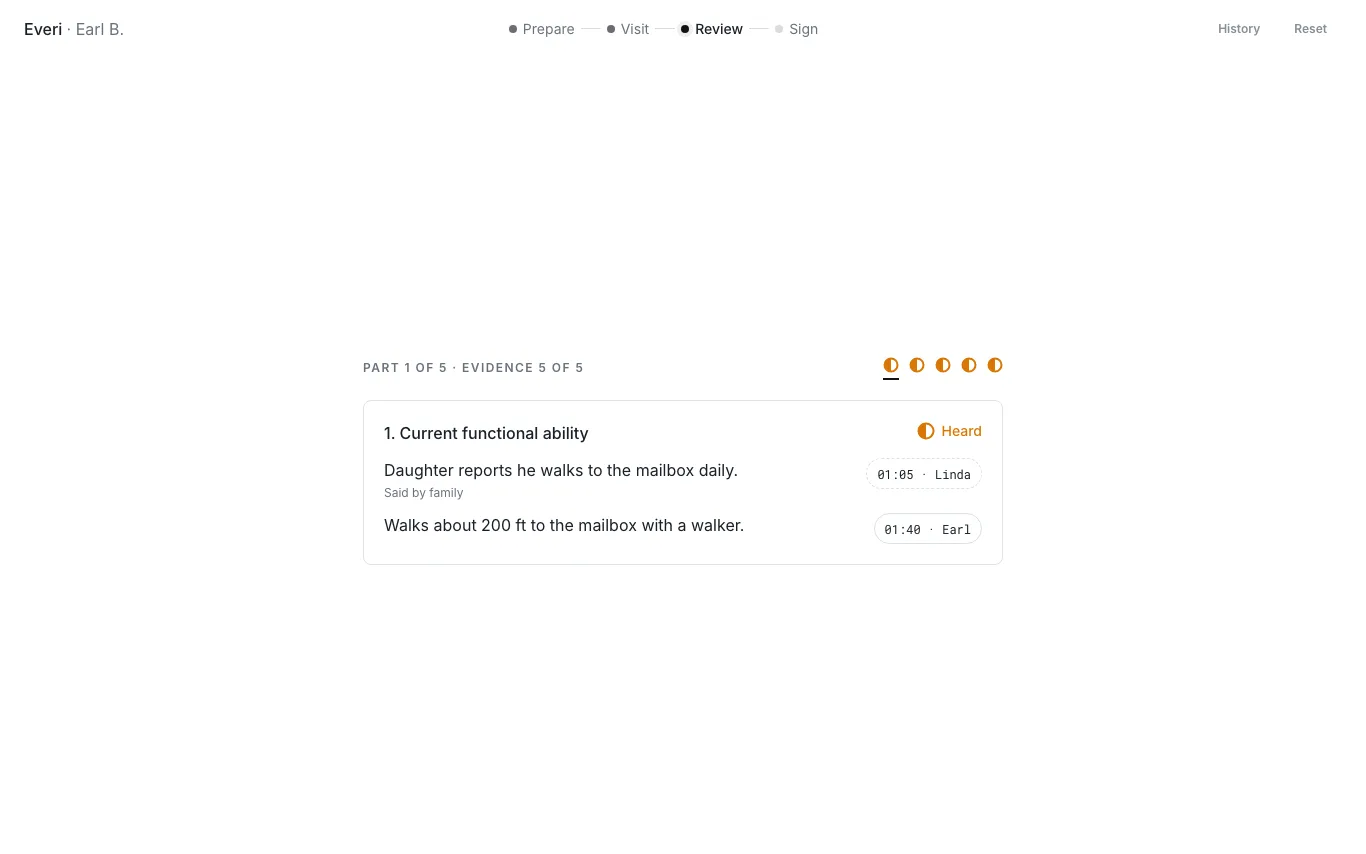
Heard is not confirmed.
The AI can mark a part heard. Only the clinician can confirm it.
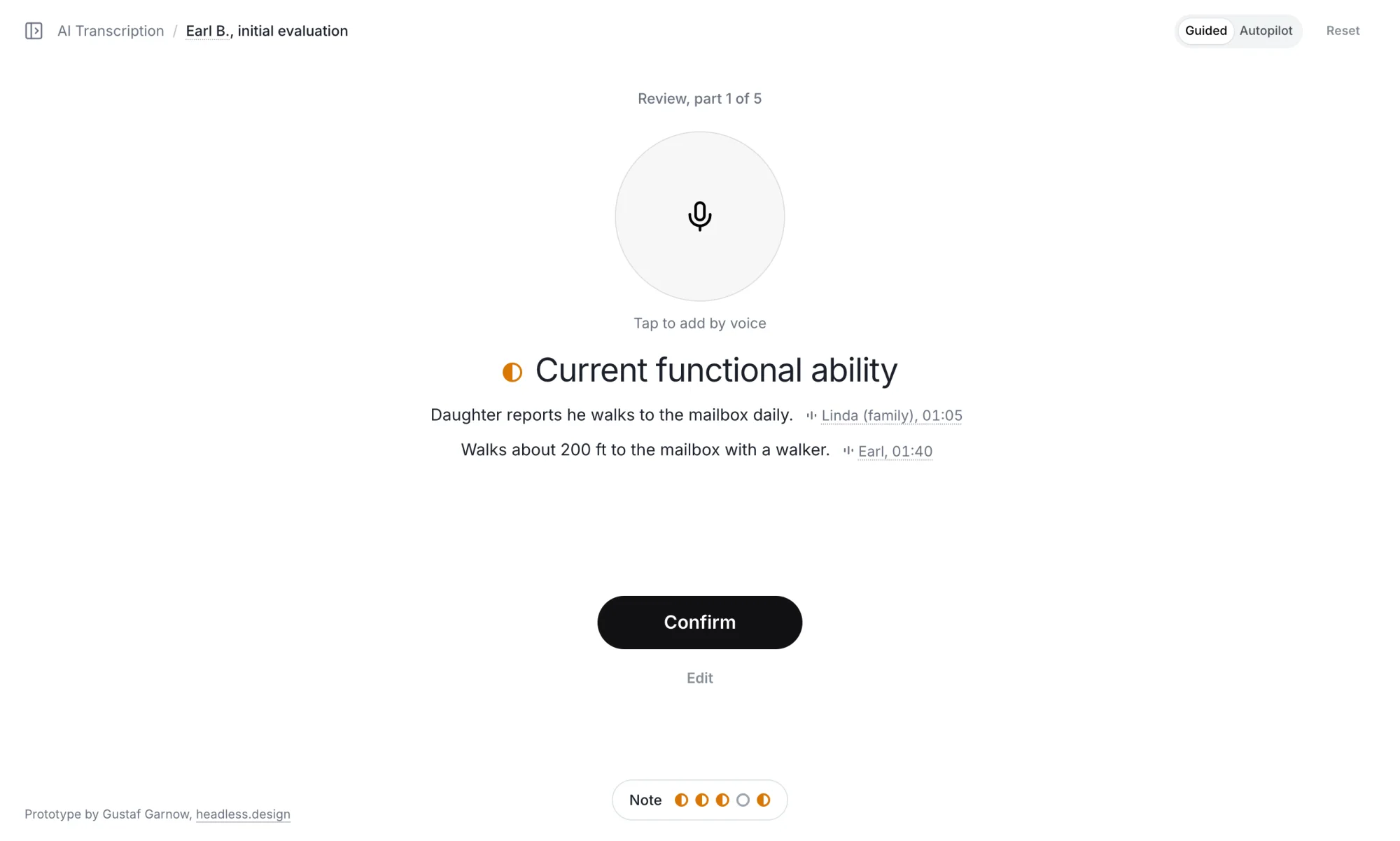
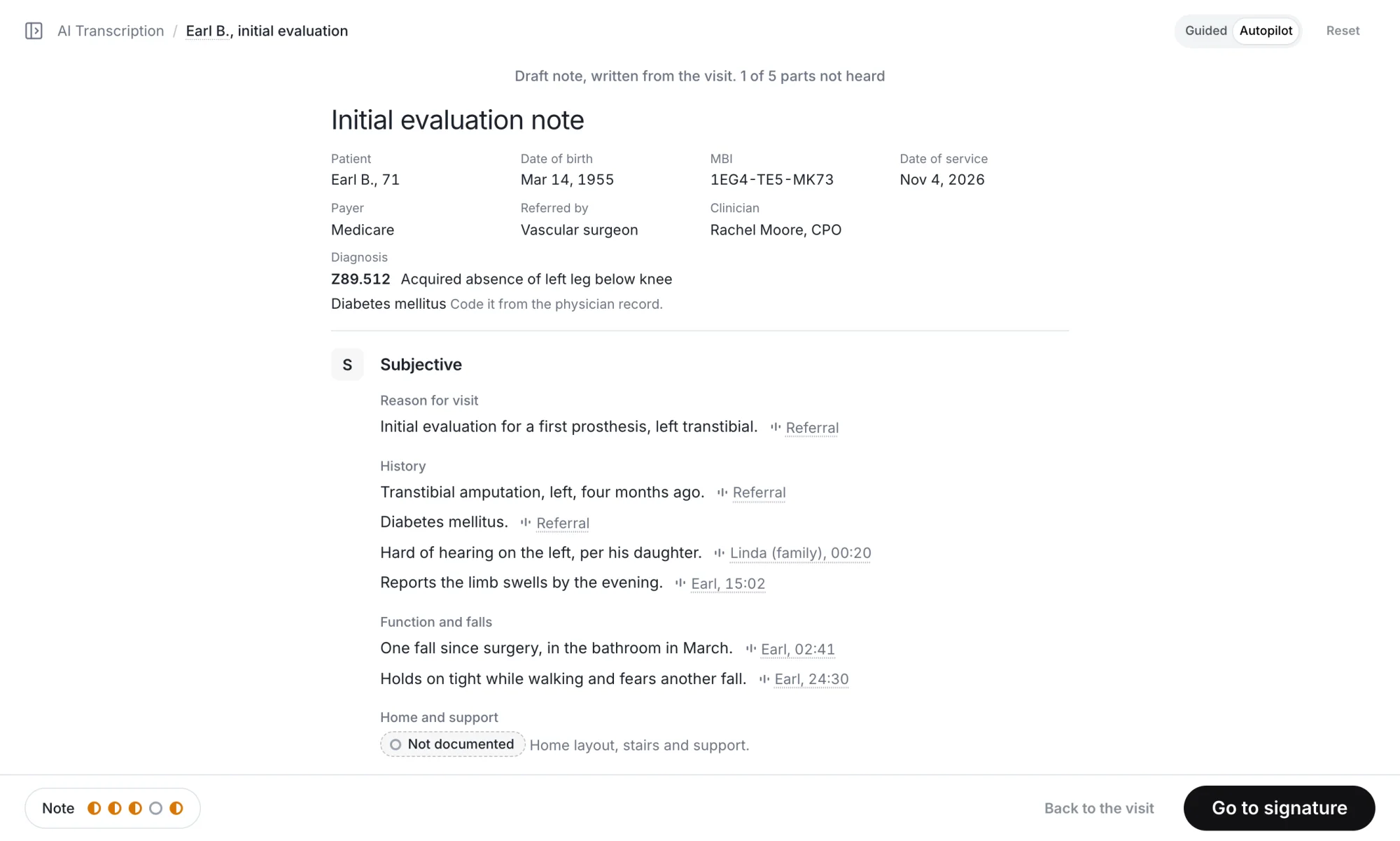
Missing stays empty.
Every line in the note carries its source. What nobody said stays empty. Nothing is generated.
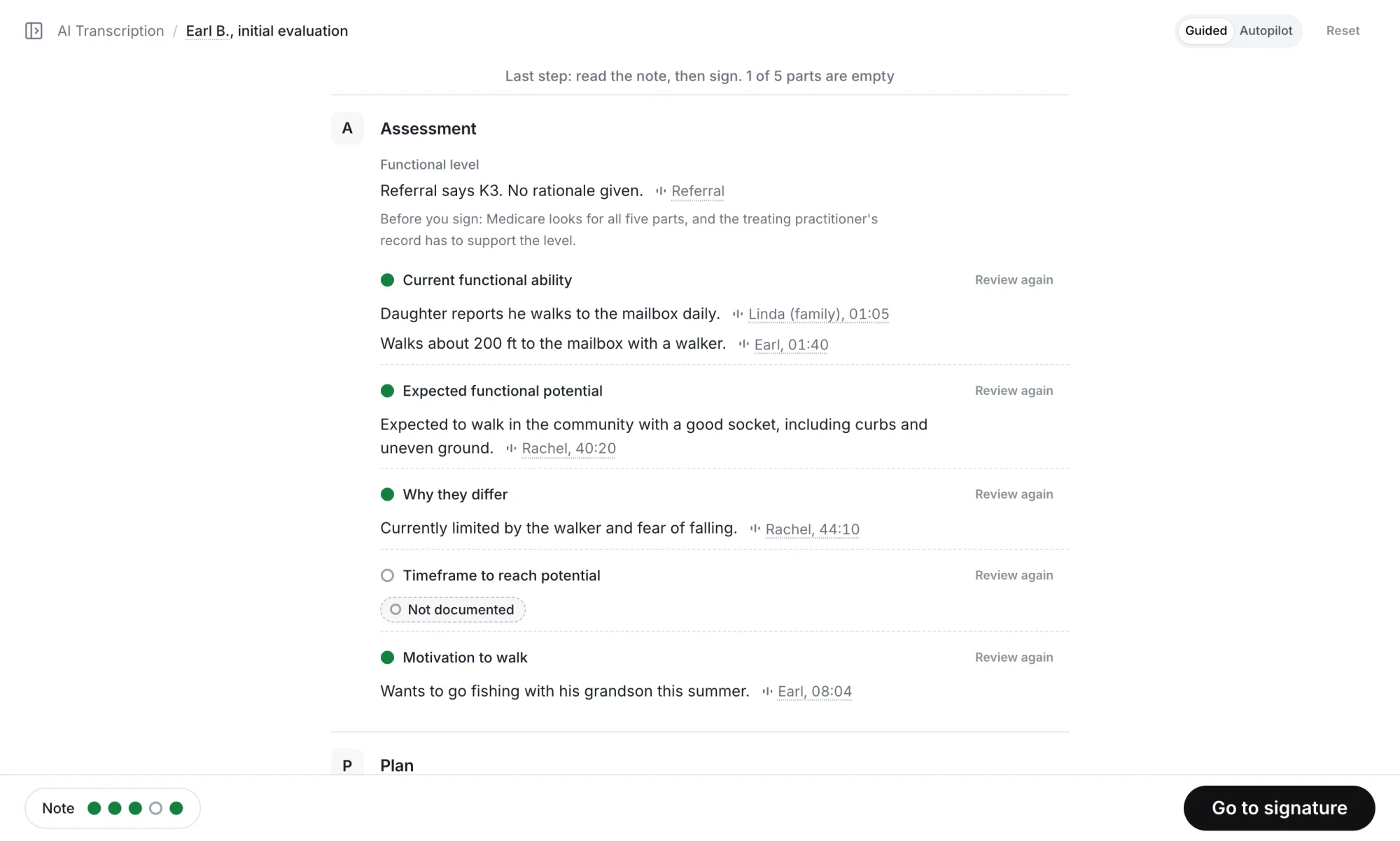
Nothing lost to a stray tap.
Every ending has a way back. No confirm dialogs.
- End visitBack to the visit.
- SignUndo for eight seconds, then locked.
- Close the editorYour words are kept.
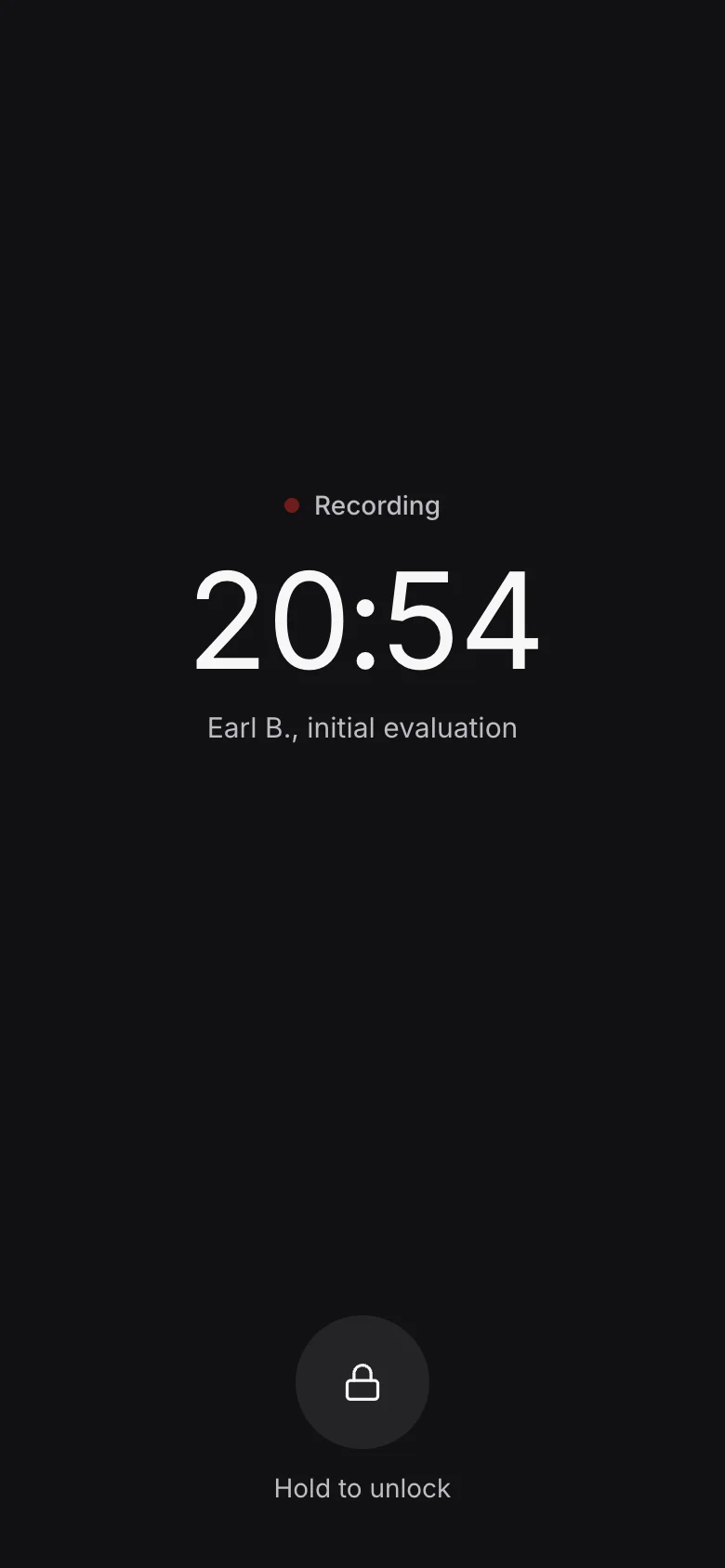
A phone in a pocket.
A lock you hold to open, and a card that follows you to other pages.
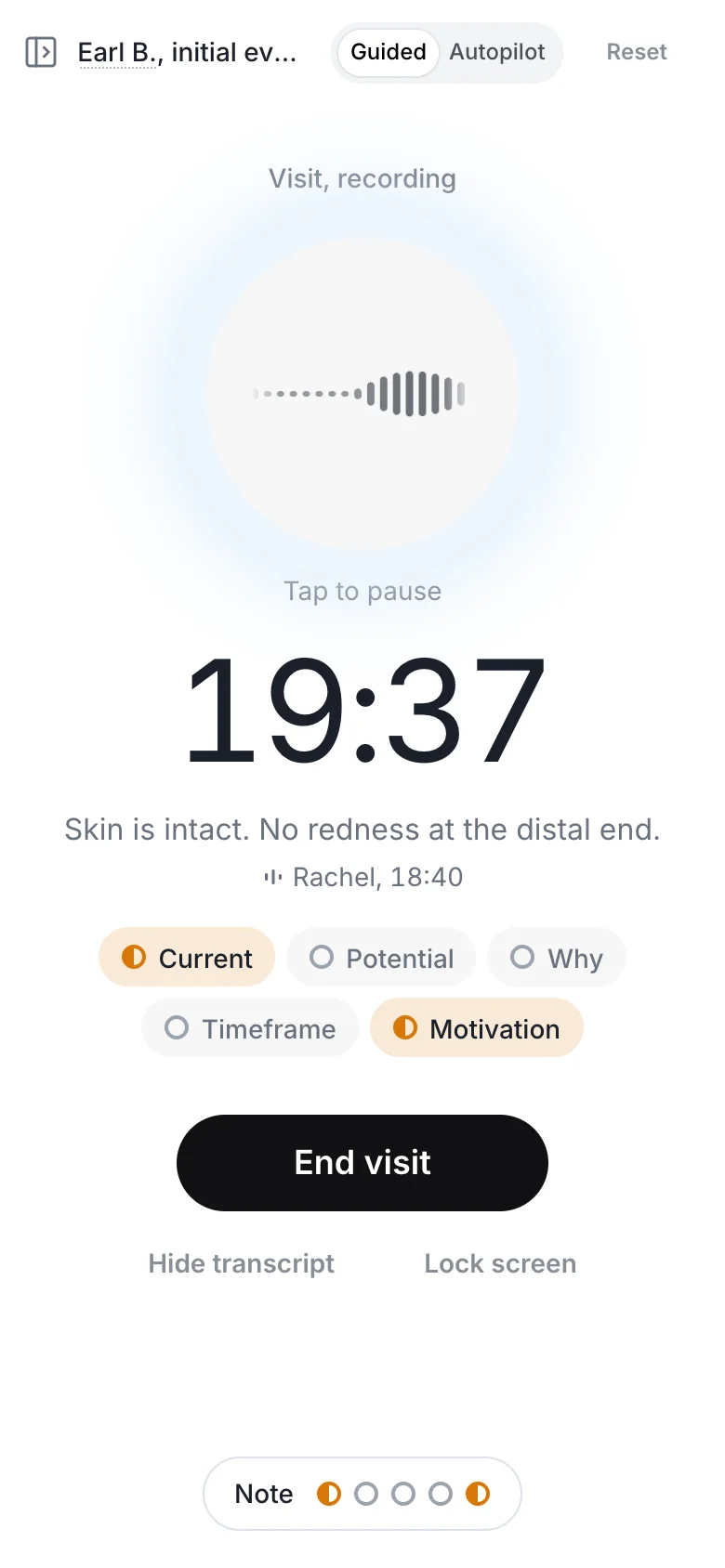
Guided, or Autopilot.
One switch. Guided: confirm each part. Autopilot: the draft is ready when the visit ends, and you only sign.
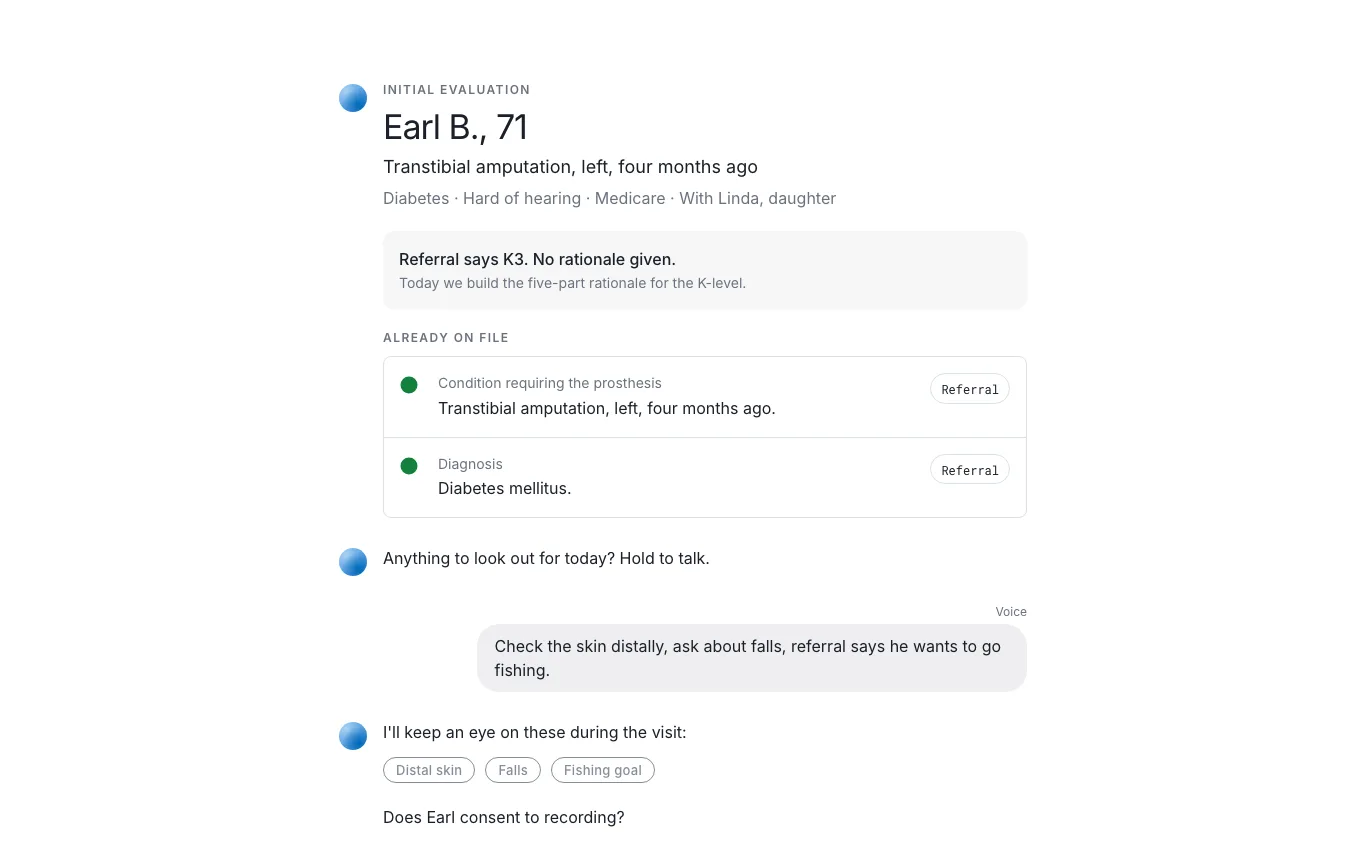
Rebuilt three times.
Forms, chat, stage, then one axis. I directed; Claude Code wrote most of the code.
- built with
- React
- TypeScript
- Vite
- Mantine
- Vitest
- Playwright
- Claude Code
Not selected. The rule travels.
Everi went with another candidate. The rule holds wherever a machine drafts and a person signs. It is the rule I design Mängda by.
A work sample, not an Everi product. Earl, Linda and Rachel are fictional. No real microphone or transcription.
in short