We put AI where nobody expects it.
An old Telia booth on a field behind Kivik Art Centre. Lift the receiver and an operator answers; on her side the year is 1962, and she can put you through: England, Moscow, a kitchen in Vitaby. Nothing tells you AI lives here.
- 00:00tone
- 00:02it connects
- 00:03crackle
- someone, 1962Hallå? Är det någon där?
- 00:09your turn.
It stands in the field. Since 5 September, it is silent. Gladeholm, Österlen.
Everyone meets AI in a chat window. We hid ours in a telephone.
We set out to build an AI product together. We bought a phone box instead, put it in a field, and made it answer.
Nothing to teach. A whole generation has never even used one, and it still needs no manual.
The point is not the voice. It is being put through.
New voices take over now and then. The first thing people do is hang up and lift the receiver again, to see who they get next.
I walked out and lifted the receiver.
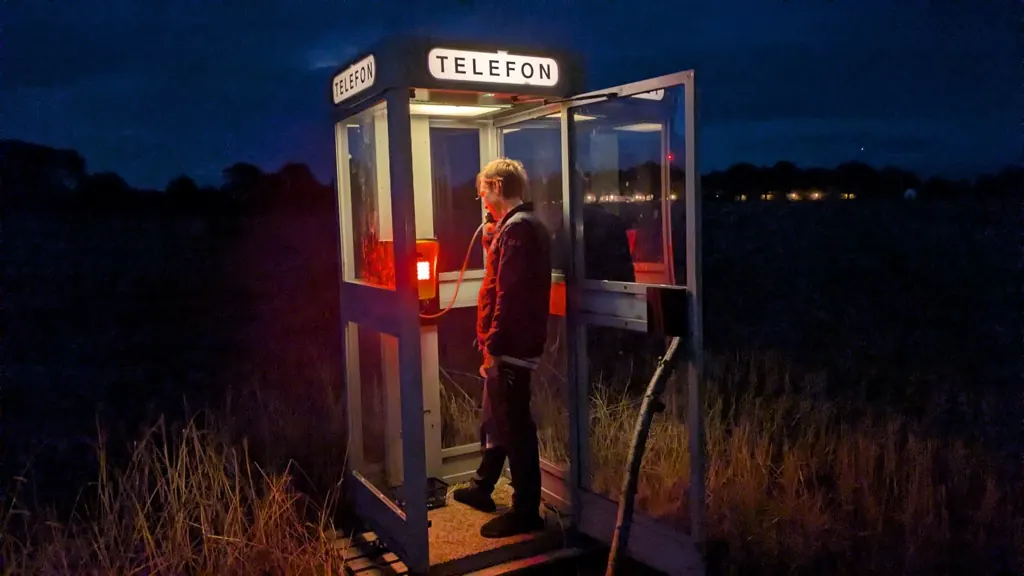
Lit red, from the handset alone.
Not phone numbers. A cast of characters.
The numbers are entries in a directory I wrote, printed in the booth and nowhere else. The characters behind them rotate, and new ones are written every week. The line is never the same twice.
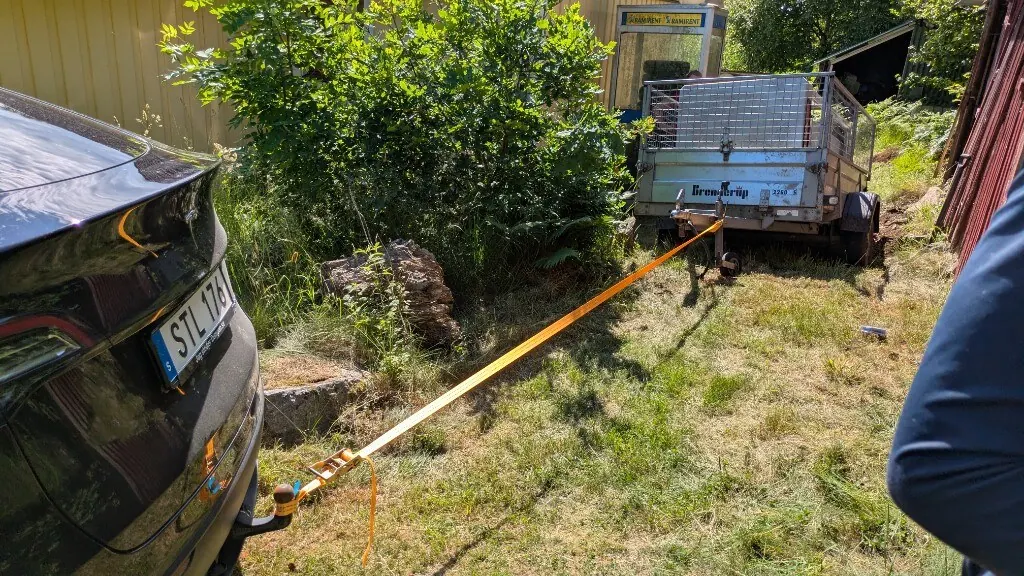
Day one: 200 kilos of concrete, two hours from the field.
What the months actually went into.
researchWhich stack survives a field?
Weeks of research before anything was bought: how a call travels, which voice platform can hold a persona, what runs on mobile coverage alone.
firmwareThe phone was never meant for this.
An explosion-rated mine telephone does not speak voice-agent out of the box. I worked with the supplier, sent field reports back, and they sent new firmware. Build after build, until it did.
castingTwelve voices, six languages, one agent.
What does a 1962 switchboard operator sound like in Swedish? How should Moscow answer? Twelve voices, each keeping its own language.
the storyAn open phone. No task, no script.
Every voice-agent demo has one job, book the table, take the order. That is why they feel almost human. This phone has none: anyone can lift it and say anything, and writing a roleplay that survives an open line still isn't done. It was tuned after what actually happened on the line.
Solid stands in the field. Dashed lives in the cloud. No computer in the booth.
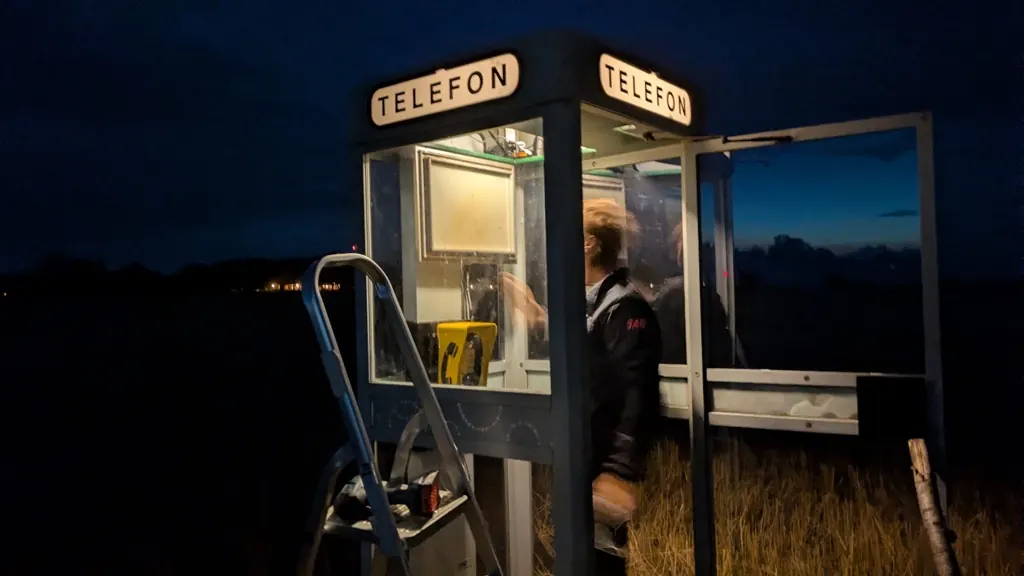
200 kilos of concrete, online over 4G.
Every check the phone could run came back green. None of it was true.
Secured, waterproofed, careful with every watt from the battery. The aim is round the clock through every season, and winter is not solved yet.
- built with
- industrial SIP phone
- 4G + Twilio
- ElevenLabs voice AI
- Supabase
- custom-built TELEFON sign
- concept, voice and code: mine
- sourcing and installation: with Johan Nygren
- self-funded, no grants, no sponsors
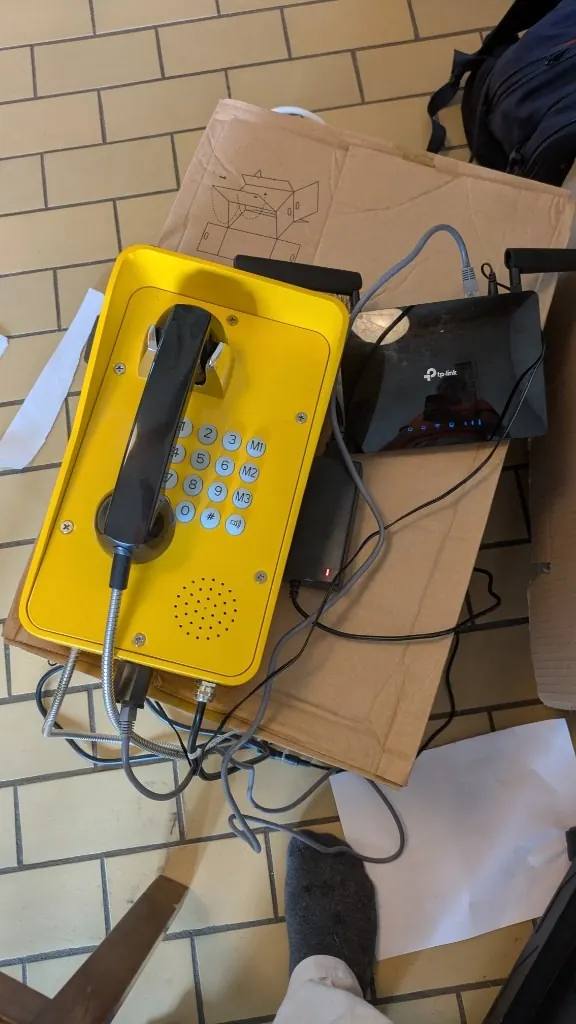
Nobody knows which voice you'll get.
Bench numbers from development, not the field: 188 test calls, 91 through the physical receiver, a 64 second median, one that ran ten minutes. The public line went quiet on 5 September.
It ran on a SIM card, a phone bill and a voice API. To come back and stay back, it needs power it makes itself.
Everyone demos AI on a screen. I put it in an industrial telephone.
whyclose
A voice AI that answers is the easy part. The months and the long nights went on rain, mobile internet, firmware, and sounding like a person instead of an assistant. It is not a perfect build: self-funded, our own money, and voice tech moves monthly, so the stack under the booth will keep changing. Maybe more booths will start appearing around Sweden.
Somewhere in those nights I worked it out: think like a designer, ship like an engineer.
in short
A phone booth that answers.
- 1962 operator
- No computer in the booth
- Open phone, no script
- Twelve voices
- Self-funded
- Offline since 5 Sep
You never know who answers.